
Salar de Atacama and the Flamingos at Chaxa
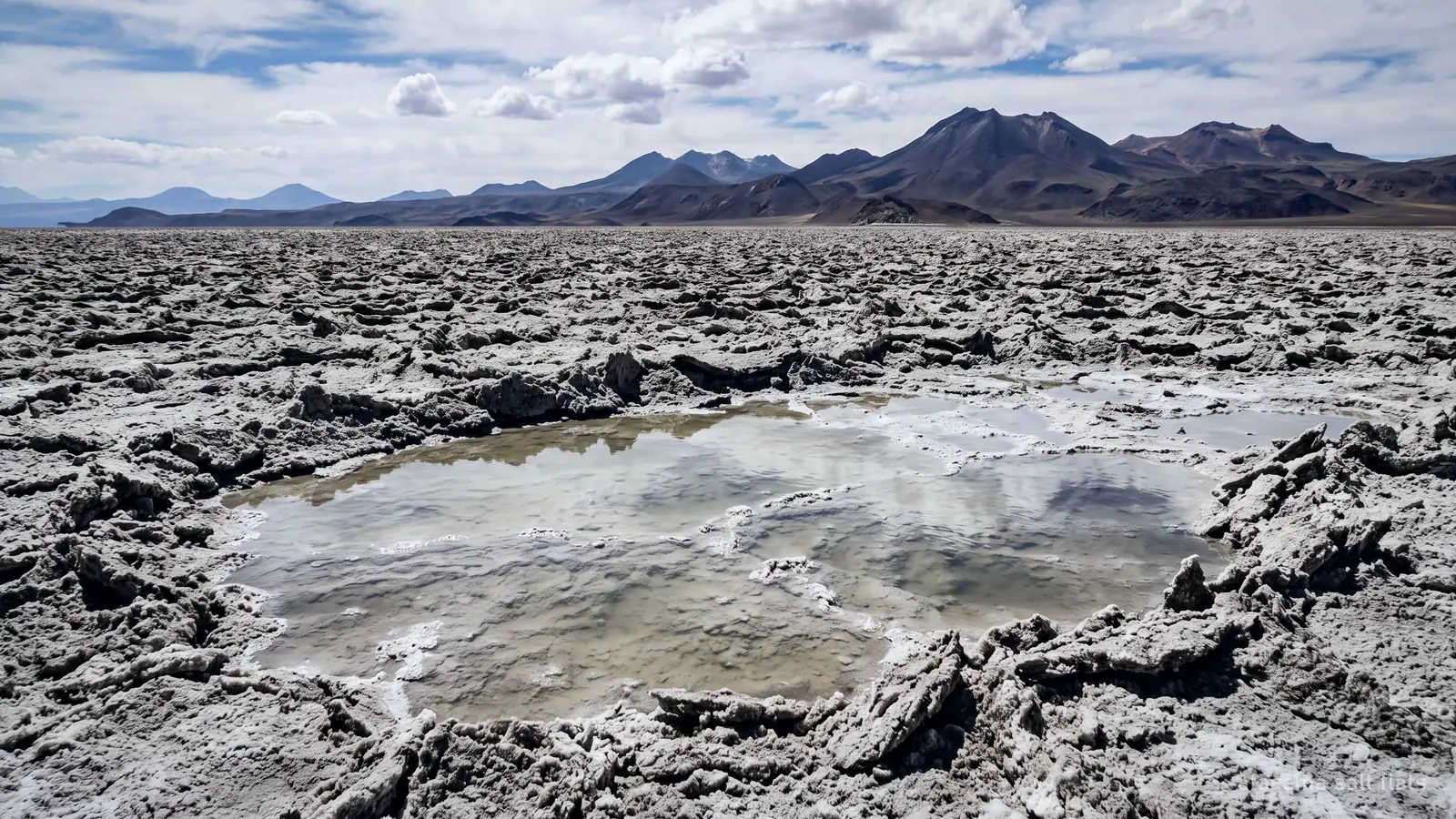
The Salar de Atacama covers 3,000 square kilometres, roughly 100 km long by 80 km wide, which makes it the largest salt flat in Chile and the third largest in the world after Uyuni in Bolivia and Salinas Grandes in Argentina. It is not the mirror-flat white plain most people picture when they hear salt flat — that is Uyuni. This one is a crust of jagged grey halite with shallow brine lagoons in it, and the birds are the reason to come.
Why it does not look like Uyuni
Uyuni floods and dries, which is what produces the mirror. The Salar de Atacama does not: its surface is a rough, broken crust that will cut your hands if you fall on it. If the reflection photograph is what you came for, that is a three-day crossing into Bolivia, not an afternoon from San Pedro.
The flamingos at Laguna Chaxa
Three species feed here — Andean, Chilean and James's — filtering brine shrimp out of the shallows. Chaxa, within the Soncor sector of Los Flamencos National Reserve, is the reliable place to see them. Dawn and late afternoon are the active hours and the light is better then too.
The lithium under it
The brine beneath the salar holds lithium at about 2,700 parts per million. As of 2008 this basin contained 27 per cent of the world's lithium reserve base, and by 2017 it supplied roughly 36 per cent of the world's lithium carbonate. The evaporation ponds are visible from the road, and the water they use is the same water the lagoons depend on. It is the argument running underneath every conversation about this landscape.
When to go
Most tours reach the salar in the late afternoon on the way back from the altiplanic lagoons, which is the right time for birds and for light. A dedicated sunrise trip is possible but rarely sold separately.
What it costs
The Soncor and Chaxa sectors charge separately, collected on site. Tours that include the salar as part of a longer day usually do not include that fee in the headline price.
Frequently asked questions
Is the Salar de Atacama the same as Uyuni?
No. Uyuni is in Bolivia, is about three times the size and floods to produce the mirror effect. The Salar de Atacama is a rough grey crust with brine lagoons in it.
Where do you see the flamingos?
Laguna Chaxa, in the Soncor sector of Los Flamencos National Reserve. Three species feed there: Andean, Chilean and James's.
How big is it?
About 3,000 square kilometres, 100 km by 80 km. The largest salt flat in Chile and the third largest in the world.
Sources